Posts

Showing posts with the label Science

Environmentalism Harms The Planet

Image
It’s now pretty much irrefutable that our planet is getting hotter. Temperatures are soaring, sea levels are going up, and we’re now comfortably cruising toward an apocalypse of our own making. So it makes sense that you’d want to do something about it. But I’ve got some bad news: Chances are, whatever you’re doing isn’t helping. Take carbon offsetting. The idea goes that you pay a little extra for your flight, and in return your airline plants a tree or whatever. Sounds good, except for the part where it doesn’t make any sense. See, we in the West produce a lot of emissions - so much so that offsetting them all would require the rest of the world to start producing negative carbon. In other words, offsetting is no help at all, just like recycling. Yeah, sorry to burst your bubble, but recycling has become a global market. That means that suppliers of recycled goods follow the money - even if it involves shipping their produce across the world, at ozone-shredding energy costs...


Top 10 Smartphones

Image
Your smartphone is the one thing that never leaves your side because it can do it all. But the best smartphones do everything well. A great handset takes amazing photos, offers a bright and crisp HD screen and has enough speed to help you multitask with ease. There’s also plenty of variety out there when it comes to software and the overall user experience. That’s where we come in. Once you’ve decided on your platform of choice - Android, iOS, Windows Phone or BlackBerry - then it’s time to pick a device. At LAPTOP we test every major smartphone on the market and rate each one based on design, features, performance and battery life to help you make the right call. Here are our top 10 smartphones, ranging from the most sleek and compact handsets to the biggest phablets. Samsung Galaxy S4 The Samsung Galaxy S4 takes Android phones to the next level with an awesome camera, innovative gesture controls and best-in-class multitasking.

AC 130 Spectre

Image
The AC-130 Spectre (that big-ass plane from the Call of Duty games) probably isn’t going to be a new piece of technology to most of the people reading this, due to its aforementioned inclusion in a popular video game series. However, it’s the sheer amount of fire-power this thing possesses, combined with how little any given person can do about it, that we think will be surprising to people. If you’ve played the games, you no doubt know that the AC-130 gunship is able to rain down death from a mile in the sky, literally hitting enemies through windows, and even when they’re within spitting distance of a friendly combatant. Along with this frankly insane amount of firepower it has at its disposal, the AC-130 also packs something colloquially known as “Angel Flares,” a combination of chaff and flares which make the AC-130 all but invincible to all known lock-on technology.

Amazing News Some Strange Particles Shape

Image
Exotic particles called neutrinos have been caught in the act of shape-shifting, switching from one flavor to another, in a discovery that could help solve the mystery of antimatter. Neutrinos come in three flavors — electron, muon and tau — and have been known to change, or oscillate, between certain flavors. Now, for the first time, scientists can definitively say they've discovered muon neutrinos changing into electron neutrinos. The discovery was made at the T2K neutrino experiment in Japan, where scientists sent a beam of muon neutrinos from the J-PARC laboratory in Tokai Village on the eastern coast of Japan, streaming 183 miles (295 km) away to the Super-Kamiokande neutrino detector in the mountains of Japan's northwest.

Aeroscraft: The Airship of the Future

Image
The first powered airship took to the skies on September 24, 1852, and the golden age of this type of aircraft ended with the tragic Hindenburg disaster on May 6, 1937. These days, we mostly see airships in the form of floating billboards. However, some have refused to let go of the notion that airships may have an important role to play in the future of air travel. Science fiction authors and filmmakers often feature reinvented takes on airships. And as it turns out, they could be onto something. Manufactured by Montebello, California-based American aircraft company the Worldwide Aeros Corporation, the Aeroscraft is a far cry from the blimps of the past. From its rigid structure to its control of static heaviness (COSH) system, it’s a modern aircraft that incorporates many cutting edge and ground-breaking technologies. The first functioning prototype, a more basic model known as The Pelican, was successfully floated on January 3, 2013 in Tustin, California. The Pelican w...

Amazing Depleted Uranium Rounds

Image
Depleted uranium rounds sound exactly like the kind of thing you’d want to stay right the hell away form. Even with the “depleted” bit thrown in there, these things still sound worse than wasps made of anthrax. In a nutshell, depleted uranium rounds are exactly what you’d expect: rounds with a small amount of uranium crammed in them, because the pointy metal thing that flew at you at 400 MPH wasn’t dangerous enough. It’s not what these rounds do to the human body that makes them terrifying though; it’s what they do to armour.

Empty Chinese-Built Housing Development of Kilamba, Angola

Image
The modern ghost town of Kilamba isn’t something you’d expect to find in Angola - indeed, it’s highly reminiscent of China’s ghost town of Ordos City. That’s because it was built by the China International Trust and Investment Corporation, financed by a Chinese credit line and repaid by the Angolan government with oil. The series of 750 eight-story apartment blocks, along with over 100 commercial complexes and a dozen

Some Keys to the Keyless Future

Image
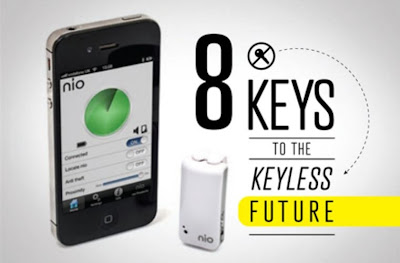
Getting into your house, protecting your data, and finding your stuff gets help with sophisticated devices new to the market. Here are eight security products that will help get you indoors, safeguard your valuables, and help you find things. Goji The Goji Smart Lock is a lock for your front door that replaces your deadbolt, and that you can control with your smartphone. Via the Goji app, your phone can receive a picture, text, or app alert whenever someone is at your door. You can schedule access via the app, text, or email, if you want to let a friend inside while you're away. And for people in your life who don't own smartphones, Goji comes with old-fashioned keys and programmable Bluetooth Low Energy fobs. The lock runs on batteries, though, so make sure you have spares on hand.

Most Amazing The Pavilion Protects Your Car and and VOLVO Developers The 'NO DEATH' CAR

Image
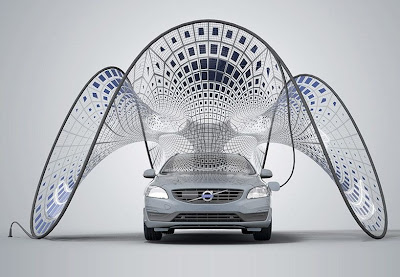
Most Amazing The Pavilion Protects Your Car and and VOLVO Developers The 'NO DEATH' CAR Although solar power is a resource that most of us agree we should be taking far more advantage of, the truth is that solar panels are often just as visually uncool as they are inefficient relative to other sources of energy. However, as manufacturing processes evolve to allow for more adventurous designs, the shift to aesthetically pleasing solar harvesters is gathering momentum, as exemplified by this new device created as an add-on to Volvo's V60 electric vehicle. Designed by Los Angles-based architecture studio Synthesis, the idea is the winner of the international "Switch to Pure Volvo" competition that called for an innovative solution to showcase the automaker's latest electric vehicle. The collapsible pavilion uses integrated photovoltaic panels tensioned over carbon fibre rods to create an attractively futuristic butterfly wing-like covering that bot...

In Today's Computer Processors

Image
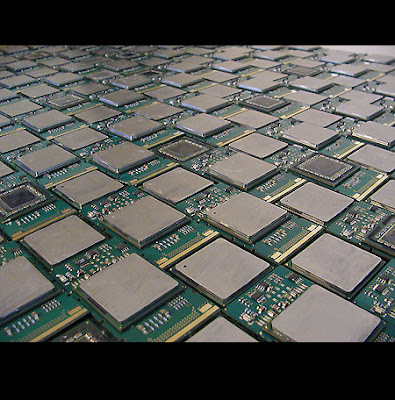
In today's computer processors, much of the power put into running the processor is being wasted. A research team at Case Western Reserve University came up with a novel idea called fine-grained power gating, which saves power and money in a couple of ways: less energy would be used, and less heat produced. "Using less power produces less heat. Less heat means less cooling is needed," said Swarup Bhunia, professor of electrical engineering and computer science and an author of the research. "That can avoid the need for a big fan to cool off the processor, which saves a lot of money." Processors are used in a variety of products, from computers to cell phones. Operational costs could be cut by more than one-third, the researchers say. Bhunia, PhD student Lei Wang and PhD alumni Somnath Paul, whose work was funded by the Intel Corporation; presented their idea at the 25th International Conference on VLSI (Very-Large-Scale Integration) D...

Latest News for Every One: The Amazing Iran's Monkey

Image
On Jan. 28, 2013, Iranian space officials announced they had successfully launched a live monkey into space, inching closer to the Islamic republic's goal of a manned mission. After a suborbital flight, the space capsule Pishgam (which means "pioneer" in Farsi) returned the monkey alive, according to Iranian news agencies. In 2011, Iran's effort to launch a live rhesus monkey into space atop a Kavoshgar-5 rocket failed, though what actually happened didn't come out in news reports from the country.

Tablets for Students 2013

Image
There are lots of reasons for students to invest in a tablet. They’re practically weightless in a backpack, they last all day on a charge (at least the good ones) and there are lots of touch-friendly student apps available that can help your child get ahead. Plus, you never have to wait for them to boot. What separates the tablets worth considering from the ones worth buying? Design, versatility, included apps and available accessories. You also have to keep the age of the student in mind. Parents of grade-school children will likely want a tablet that offers parental controls and apps and content geared toward little ones. Those who prefer to scribble notes in class will prefer a slate with pen input. And those looking for a tablet and laptop in a single device should look for compatible keyboards. Here’s our top seven tablet picks for Back to School 2013. The fourth-generation iPad and iPad mini have one very important thing in common: more than 375,000 apps designed ...

Who Make the 1st computer mouse??????????

Image
The computer mouse as we know it today was invented and developed by Douglas Englebart during the 60's and was patented on November 17, 1970. While creating the mouse, Douglas was working at the Stanford Research Institute, a think tank sponsored by Stanford University, and originally referred to the mouse as a "X-Y Position Indicator for a Display System." This mouse was first used with the Xerox Alto computer system in 1973. However, because of its lack of success the first widely used mouse is credited to being the mouse found on the Apple Lisa computer. Today, the mouse is now found and used on every computer. The picture to the right was taken by Maracin Wichary at the New Mexico Museum of Natural History and Science, and is an example of what the first computer mouse looked like. As can be seen by the picture, the mouse was much larger than today's mouse, square, and had a small button in the top right corner.

Process of Natural Death

Image
I'm not given for answers like 'the organs shut down,' or 'our body stops producing genes.' I'm telling you why that happens. We have the ability to stay alive forever by having our cells replacing themselves all the time. So why does it stop? The reason behind this natural phenomenon is that our cells are predestined to death however these dead cells are also replaced by new cells which are the exact copy of previous cells. This process is under the control of genetic information stored in our cells in the form of DNA (genetic material).  When the cell divides this genetic material (DNA) also divides and produces the copies, which are exactly same as that of original DNA. This process usually provides the integrated copies however there are some factors, which disturbed the integration, and results in various malfunctions. These factors are responsible for producing mutations, which causes changes in the genetic material, which ultimately result...

12 Inventors Killed by Their Own Inventions

Image
While some inventors enjoy fame and fortune thanks to their inventions, for a handful of inventors, their devices proved their own worst enemies. Here are 12 unlucky (and in some cases, foolhardy) inventors who perished thanks to their own creations. Franz Reichelt or François Reichelt, the Flying Tailor (1879-1912) This Austrian-born French tailor is remembered for his accidental death by jumping from the Eiffel Tower while testing his own invention, a wearable parachute suit for pilots who would escape from a damaged plane. The first tests were quite successful with using dummies, so he wanted to jump himself. The 187-foot (57 m) fall to the icy ground killed him instantly. William Bullock (1813-1867) The father of the web rotary printing press and modern printing was killed by his own invention in a bizarre

Complete Map Of The Human Brain

Image
A group of researchers has managed to create the most detailed and complete map of the human brain to date. BigBrain, the 3D digital reconstruction of the brain of a 65-year-old woman, reveals its details with microscopic precision.  The brain is made up of numerous networks of neurons that vary enormously in size, shape, and layers. Scientists can now see cerebral neuronal distribution with greater detail using this new model.  The finding, published in the journal Science, could drive further research into a wide range of brain diseases, including Alzheimer's and Parkinson's.  BigBrain will serve as an atlas for neurosurgery and give researchers invaluable insight into how the brain processes emotion, cognition and language. Lead author, Katrin Amunts, from the Research Centre Jülich, Germany, said that "it is a common basis for scientific discussions because everybody can work with this brain model." 

3D Printed “Bionic” Ear Exhibits Enhanced Auditory Sensing

Image
Scientists used 3-D printing to merge tissue and an antenna capable of receiving radio signals. Credit: Frank Wojciechowski Researchers at Princeton created a 3D printed “bionic” ear that exhibits enhanced auditory sensing for radio frequency reception, merging biologic and nanoelectronic functionalities via 3D printing. Scientists at Princeton University used off-the-shelf printing tools to create a functional ear that can “hear” radio frequencies far beyond the range of normal human capability. The researchers’ primary purpose was to explore an efficient and versatile means to merge electronics with tissue. The scientists used 3D printing of cells and nanoparticles followed by cell culture to combine a small coil antenna with cartilage, creating what they term a bionic ear. “In general, there are mechanical and thermal challenges with interfacing electronic materials with biological materials,” said Michael McAlpine, an assistant professor of mechanical and aerosp...

Flying bicycle

Image
Cycling through heavy traffic can be a risky affair, with vehicles jumping from lane to lane without warning, and pedestrians appearing from nowhere as they risk life and limb to get from one side to the other. It’d be so much safer if you could avoid these hazards by simply flying above them, while keeping an eye out for low bridges and power lines, naturally. The idea of a flying bicycle may sound a little far-fetched, but in the Czech capital Prague on Wednesday a group of local companies – including Technodat, Evektor and Duratec – gathered to test out a prototype of such a machine.

Google’s Project Loon brings Internet access to remote areas with giant balloons

Image
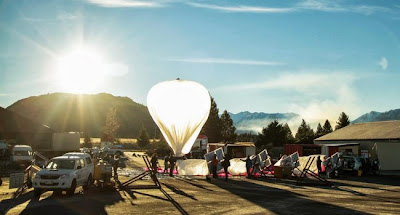
Detailed on the Official Google Blog this week, the search company announced an ambitious plan to bring Internet access to a large portion of the world’s population that either can’t afford Web access or is located in a completely remote area without an ISP. Called Project Loon, Google is looking to the sky for the answer rather than a wired network on the ground. Launching a collection of giant balloons with network hardware attached, these balloons float approximately 20 kilometers (12.4 miles) in the air being pushed by winds moving within the stratosphere. After the Project Loon balloons are launched in the air, the network devices attached to the balloons communicate with a specialized Internet antenna that’s attached to someone’s home. Each balloon is also communicating with the other balloons in the air and this network is relaying an Internet connection from a local ISP in the area. The network devices on the Project Loon balloons have been designed to filter out all o...

Charge your phone using your own body heat

Image
Dead battery? Charge your phone using your own body heat It’s beyond frustrating when you’re out an about for the day and see or hear that dreaded alert: Low Battery. Unless you have your charger and are willing to sit tight near a public outlet for a while, or you happen to have thought ahead and brought a portable charger, you’re screwed. A new creation from Vodafone just may help make situations like that a thing of the past. The company developed something called the Power Pocket, which it has built into a line of shorts and sleeping bags — no more worrying about keeping your devices juiced up on your next camping trip! — which it plans to test out this summer, when outdoor festivals are at their peak. The company has a history of staking out festivals, letting people use its Recharge-Trucks, which can service 2,000 devices at the same time. But now, the cord can be cut.