Posts

Showing posts with the label Electronic

Chelyabinsk Meteor And 2012 DA14

Image
On February 15, 2013, an asteroid entered the Earth’s atmosphere over the southern Ural region of Russia and exploded. The event was witnessed by thousands of people and became the largest known airburst since the 1908 Tunguska event. The blast produced a light brighter than the Sun, and the shock wave was felt by people all over the area. The energy of the explosion was equivalent to 20-30 of the atomic bombs used at Hiroshima. The asteroid was not detected by the authorities before the airburst, and the event surprised many people. It wounded 1,500 and damaged over 7,000 buildings. The meteor was caught on tape by multiple sources, which shows a giant fireball in the sky - followed by an enormous explosion of light. It was reported that the meteor made the ground hot, and the city smelled like gunpowder after the explosion. The event was an extremely rare occurrence and the only time in history that a meteor has been known to cause human injury.

Muscle-Propelled Force Feedback

Image
Haptic technology - or force feedback - is not new. If you’ve played a video game with a vibrating controller, you’ve experienced haptic technology - the rumble pack vibrates simultaneous with action in the game, providing a sensation along with the visual image. In some cases, force feedback is used to make you do something specific by creating a force that you naturally try to counter. Think of it like someone pushing you sideways - your body resists and pushes back towards them in an effort to maintain your balance.

modern solar-powered vehicles

Image
Sunny day for a drive Imagine never having to fill your fuel tank again. With the cost of gas these days, that may sound like wishful thinking. But as solar technology becomes more advanced, that dream could soon become a reality. In fact, vehicles that run entirely on solar power are nothing new; the first solar vehicles were built in the 1950s. Those early models weren't very practical, but modern designs have made impressive progress. Solar milestones have been made for just about every form of transportation that you can imagine. There are solar cars, of course, but there are also solar buses, trains, boats, and even a solar helicopter. Here's our rundown of seven modern solar-powered vehicles.

AC 130 Spectre

Image
The AC-130 Spectre (that big-ass plane from the Call of Duty games) probably isn’t going to be a new piece of technology to most of the people reading this, due to its aforementioned inclusion in a popular video game series. However, it’s the sheer amount of fire-power this thing possesses, combined with how little any given person can do about it, that we think will be surprising to people. If you’ve played the games, you no doubt know that the AC-130 gunship is able to rain down death from a mile in the sky, literally hitting enemies through windows, and even when they’re within spitting distance of a friendly combatant. Along with this frankly insane amount of firepower it has at its disposal, the AC-130 also packs something colloquially known as “Angel Flares,” a combination of chaff and flares which make the AC-130 all but invincible to all known lock-on technology.

Amazing News Some Strange Particles Shape

Image
Exotic particles called neutrinos have been caught in the act of shape-shifting, switching from one flavor to another, in a discovery that could help solve the mystery of antimatter. Neutrinos come in three flavors — electron, muon and tau — and have been known to change, or oscillate, between certain flavors. Now, for the first time, scientists can definitively say they've discovered muon neutrinos changing into electron neutrinos. The discovery was made at the T2K neutrino experiment in Japan, where scientists sent a beam of muon neutrinos from the J-PARC laboratory in Tokai Village on the eastern coast of Japan, streaming 183 miles (295 km) away to the Super-Kamiokande neutrino detector in the mountains of Japan's northwest.

Earth from Saturn

Image
It's not often that some event comes along to really show humanity its true place in the universe, but two NASA spacecraft have just managed just that. I'm talking, of course, about the spectacular NASA photos of Earth as it appeared from Saturn —nearly 900 million miles away (1.4 billion kilometers) —as well as a photo of our planet as it appeared from Mercury, nearly 61 million miles (98 million km) distant. NASA took the photos Friday (July 19) using the Cassini spacecraft around Saturn and the Messenger spacecraft around Mercury as part of a global campaign to show the world how the solar system views our planet Earth. The space agency even worked to coordinate campaigns to involve space fans by having them wave at Saturn. The images, by far, are amazing. Earth and its moon stand out as bright pinpricks of light in Messenger's view from Mercury, while our planet is a pale, fuzzy dot nestled between Saturn's rings in the Cassini view. From my perspectiv...

Aeroscraft: The Airship of the Future

Image
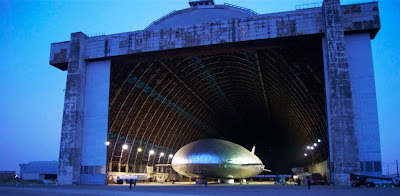
The first powered airship took to the skies on September 24, 1852, and the golden age of this type of aircraft ended with the tragic Hindenburg disaster on May 6, 1937. These days, we mostly see airships in the form of floating billboards. However, some have refused to let go of the notion that airships may have an important role to play in the future of air travel. Science fiction authors and filmmakers often feature reinvented takes on airships. And as it turns out, they could be onto something. Manufactured by Montebello, California-based American aircraft company the Worldwide Aeros Corporation, the Aeroscraft is a far cry from the blimps of the past. From its rigid structure to its control of static heaviness (COSH) system, it’s a modern aircraft that incorporates many cutting edge and ground-breaking technologies. The first functioning prototype, a more basic model known as The Pelican, was successfully floated on January 3, 2013 in Tustin, California. The Pelican w...

Amazing Depleted Uranium Rounds

Image
Depleted uranium rounds sound exactly like the kind of thing you’d want to stay right the hell away form. Even with the “depleted” bit thrown in there, these things still sound worse than wasps made of anthrax. In a nutshell, depleted uranium rounds are exactly what you’d expect: rounds with a small amount of uranium crammed in them, because the pointy metal thing that flew at you at 400 MPH wasn’t dangerous enough. It’s not what these rounds do to the human body that makes them terrifying though; it’s what they do to armour.

Record Arctic storm

Image
Months before Hurricane Sandy hurled the Atlantic Ocean into houses and cities along the East Coast, another record-breaking cyclone battered North America, helping push this year's Arctic sea ice to a record low, a new study finds. Arctic sea ice has been declining for decades, reaching a record low in September 2007 and hitting that record again in 2012.  "The Great Arctic Cyclone of August 2012" arose in Siberia on Aug. 2 and crossed the Arctic Ocean to Canada, lasting an unusually long 13 days. The cyclone hit a pressure minimum of 966 millibars on Aug. 6, the lowest ever recorded for an Arctic storm, professors Ian Simmonds and Irina Rudeva of the University of Melbourne in Australia report in the Dec. 15 issue of the journal Geophysical Research Letters. The pressure reading is only 26 mb higher than Hurricane Sandy's record low of 940 mb. (A typical low-pressure system usually hits around 1,000 mb.) "This pressure minimum and cyclone long...

In Today's Computer Processors

Image
In today's computer processors, much of the power put into running the processor is being wasted. A research team at Case Western Reserve University came up with a novel idea called fine-grained power gating, which saves power and money in a couple of ways: less energy would be used, and less heat produced. "Using less power produces less heat. Less heat means less cooling is needed," said Swarup Bhunia, professor of electrical engineering and computer science and an author of the research. "That can avoid the need for a big fan to cool off the processor, which saves a lot of money." Processors are used in a variety of products, from computers to cell phones. Operational costs could be cut by more than one-third, the researchers say. Bhunia, PhD student Lei Wang and PhD alumni Somnath Paul, whose work was funded by the Intel Corporation; presented their idea at the 25th International Conference on VLSI (Very-Large-Scale Integration) D...

Who Make the 1st computer mouse??????????

Image
The computer mouse as we know it today was invented and developed by Douglas Englebart during the 60's and was patented on November 17, 1970. While creating the mouse, Douglas was working at the Stanford Research Institute, a think tank sponsored by Stanford University, and originally referred to the mouse as a "X-Y Position Indicator for a Display System." This mouse was first used with the Xerox Alto computer system in 1973. However, because of its lack of success the first widely used mouse is credited to being the mouse found on the Apple Lisa computer. Today, the mouse is now found and used on every computer. The picture to the right was taken by Maracin Wichary at the New Mexico Museum of Natural History and Science, and is an example of what the first computer mouse looked like. As can be seen by the picture, the mouse was much larger than today's mouse, square, and had a small button in the top right corner.

All-in-One PC

Image
In this mod, Jake von Slatt researched Victorian era stages and discovered they were approximately 4:3 aspect ratio – the 16:9 wide-screen ratio from the cinema. He coated the 24? wide screen monitor base with black spray lacquer and topped the supports off with some pieces of a brass chandelier. Then he fashioned

Build An X-Ray? O No its a Gun!

Image
On Wednesday, the New York Times reported the curious case of Glendon Scott Crawford, a man with Ku Klux Klan connections who wanted to build an X-ray weapon to "help Israel kill its enemies while they slept." It's an act so unsubtle and cartoonishly evil that Hollywood execs would probably laugh the premise out of the room. Crawford was arrested Tuesday, after a sting operation by FBI agents in which they provided Crawford and his co-conspirator, engineer Eric J. Feight, with an nonfunctioning X-ray machine. This begs the question: Could an actual weapon be made from a working X-ray machine? X-rays are best known for taking pictures of the insides of people. While a regular dose in a medical setting is harmless, increased exposure to X-ray radiation can cause harm. In the grand scheme of radiation, it's a modest dosage. Like ultraviolet radiation, the kind that comes from the sun, too much X-ray radiation can cause cancer. That can be a death senten...

Some Tiny and Amazing Cameras

Image
Micro cameras are getting smaller every day. The top right is the world’s smallest cam, a pinhole size CMOS camera which you can see size-wise sitting upon a dime. For another dimension of creepy spying,

Pen-Sized Document Scanner

Image
Need to scan a document on the sly, as quickly as possible? The Docupen by Planon is hardly bigger than a regular writing instrument, but pass it over a sheet of paper or a photograph and it will capture and store the documents, ready to be uploaded via USB or Bluetooth to any computer.

Interesting Cell Phones

Image
Even cell phones have not escaped the aesthetic realm of Steampunk. These are made from recycled materials, vintage gears, old iron and other metals. The top two cells phones are from Russia with love.

80,000 Volt Electric Briefcase

Image
If you are carrying around documents that cannot fall into enemy hands, or money or jewelry or anything vital to keep safe, then there are normal looking briefcases that can help you keep your valuables safe. Although they come in differing colors, all come with a remote control so you can shock the living daylights out of the

The Amazing Cooltone Mini Fridge And Sounds Cool

Image
The Cooltone Mini Fridge provides an interesting combination of popular dorm room items into one “cool” package. This refrigerator has a 22 liter capacity which is enough to hold 20 standard beverage cans and keep them cold, but there’s much, much more. The Cooltone gets its name from the multiple music-playing features included in this unlikely combination. On the top of the fridge is a standard top loading CD player and and AM/FM radio which both play music out of the integrated speakers built into the sides of the Cooltone. Users can also connect stereo headphones or connect external speakers to further enhance their extra-cool music. The fridge/stereo also has a standard 3.5mm input jack where you can connect an auxiliary MP3 player to sound through the speakers for the rest of us who no longer have any CD’s.