Posts

Showing posts with the label Fish

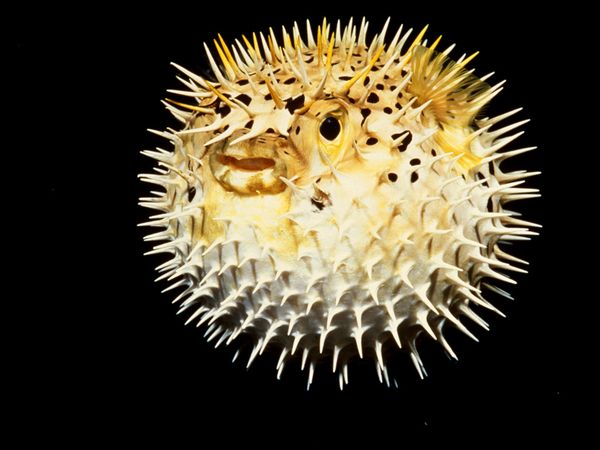
The Great pufferfish

Image
The pufferfish is a very curious animal for lots of reasons; it swallows air or water to make itself larger and more threatening, it combines its combining pectoral, dorsal, anal, and caudal fins into one set of fins (like a seahorse), and it is often super poisonous. But Dr. Gareth Fraser of Sheffield University is focused on the puffer for a different reason: its teeth.

The Amazing Electric Fishes

Image
The electric organs are specialized organs, derived from the muscles or the nerve cell's axon, that can generate electric current, employed from catching the prey (electro-paralysis) to defense, orientation (electro-location, similar the way bats and dolphins use ultrasounds in ecolocation), or as a means of communication, for mating, feeding or territory defense. The electric fish, producing electricity, are electrogenic, but as they sense the electricity they are also electroreceptive. There are species that are not electrogenic, being only electroreceptive, detecting the weak fields generated by their prey (any living thing generates a weak electric field, which could be just 0.01 microvolts), like sharks, rays (except the electric ones, which are also electrogenic), lungfishes and even ... the platypus (a mammal!). It clearly appears that electricity works only in water. There are about 500 species of electric fish. Here are the most important examples: ...
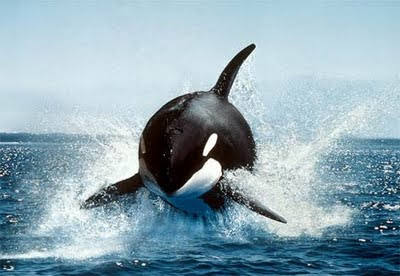
Despite it name, the Killer Whale (Orca) is actually a type of dolphin.

Image
Scientific classification Kingdom:     Animalia Phylum:        Chordata Class:           Mammalia Order:          Cetacea Suborder:     Odontoceti Family:         Delphinidae Genus:         Orcinus, Fitzinger, 1860  Species:       O. orca Orcas, or killer whales, are the largest of the dolphins and one of the world's most powerful predators. They feast on marine mammals such as seals, sea lions, and even whales, employing teeth that can be four inches (ten centimeters) long. They are known to grab seals right off the ice. They also eat fish, squid, and seabirds. Though they often frequent cold, coastal waters, orcas can be found from the polar regions to the Equator.

10 Amazing New Animal Species Discovered In 2012

Image
You’d think that after living alongside them for millions of years, we’d know just about every animal that roams the earth and its atmosphere. Thanks to limitations posed by our bodies and accessible technology, however, that’s far from true. Recent research suggests that an astonishing 86 percent of all plants and animals on land and 91 percent of those in the seas have yet to be named and cataloged. Sadly, this revelation only underscores the importance of conservation: since human development and climate change means that many species will become extinct before they’re discovered. Despite these seemingly insurmountable threats, scientists of all disciplines are still out in the field, working hard to create a record of each and every magnificent species our planet has to offer. As 2012 draws to a close, we thought it might be fun to spotlight some of the new creatures that took their official place in history this year. Some are big, some are small. Some are startling, whi...