Posts

Showing posts with the label Electric

Chelyabinsk Meteor And 2012 DA14

Image
On February 15, 2013, an asteroid entered the Earth’s atmosphere over the southern Ural region of Russia and exploded. The event was witnessed by thousands of people and became the largest known airburst since the 1908 Tunguska event. The blast produced a light brighter than the Sun, and the shock wave was felt by people all over the area. The energy of the explosion was equivalent to 20-30 of the atomic bombs used at Hiroshima. The asteroid was not detected by the authorities before the airburst, and the event surprised many people. It wounded 1,500 and damaged over 7,000 buildings. The meteor was caught on tape by multiple sources, which shows a giant fireball in the sky - followed by an enormous explosion of light. It was reported that the meteor made the ground hot, and the city smelled like gunpowder after the explosion. The event was an extremely rare occurrence and the only time in history that a meteor has been known to cause human injury.

Muscle-Propelled Force Feedback

Image
Haptic technology - or force feedback - is not new. If you’ve played a video game with a vibrating controller, you’ve experienced haptic technology - the rumble pack vibrates simultaneous with action in the game, providing a sensation along with the visual image. In some cases, force feedback is used to make you do something specific by creating a force that you naturally try to counter. Think of it like someone pushing you sideways - your body resists and pushes back towards them in an effort to maintain your balance.

modern solar-powered vehicles

Image
Sunny day for a drive Imagine never having to fill your fuel tank again. With the cost of gas these days, that may sound like wishful thinking. But as solar technology becomes more advanced, that dream could soon become a reality. In fact, vehicles that run entirely on solar power are nothing new; the first solar vehicles were built in the 1950s. Those early models weren't very practical, but modern designs have made impressive progress. Solar milestones have been made for just about every form of transportation that you can imagine. There are solar cars, of course, but there are also solar buses, trains, boats, and even a solar helicopter. Here's our rundown of seven modern solar-powered vehicles.

AC 130 Spectre

Image
The AC-130 Spectre (that big-ass plane from the Call of Duty games) probably isn’t going to be a new piece of technology to most of the people reading this, due to its aforementioned inclusion in a popular video game series. However, it’s the sheer amount of fire-power this thing possesses, combined with how little any given person can do about it, that we think will be surprising to people. If you’ve played the games, you no doubt know that the AC-130 gunship is able to rain down death from a mile in the sky, literally hitting enemies through windows, and even when they’re within spitting distance of a friendly combatant. Along with this frankly insane amount of firepower it has at its disposal, the AC-130 also packs something colloquially known as “Angel Flares,” a combination of chaff and flares which make the AC-130 all but invincible to all known lock-on technology.

Amazing News Some Strange Particles Shape

Image
Exotic particles called neutrinos have been caught in the act of shape-shifting, switching from one flavor to another, in a discovery that could help solve the mystery of antimatter. Neutrinos come in three flavors — electron, muon and tau — and have been known to change, or oscillate, between certain flavors. Now, for the first time, scientists can definitively say they've discovered muon neutrinos changing into electron neutrinos. The discovery was made at the T2K neutrino experiment in Japan, where scientists sent a beam of muon neutrinos from the J-PARC laboratory in Tokai Village on the eastern coast of Japan, streaming 183 miles (295 km) away to the Super-Kamiokande neutrino detector in the mountains of Japan's northwest.

Earth from Saturn

Image
It's not often that some event comes along to really show humanity its true place in the universe, but two NASA spacecraft have just managed just that. I'm talking, of course, about the spectacular NASA photos of Earth as it appeared from Saturn —nearly 900 million miles away (1.4 billion kilometers) —as well as a photo of our planet as it appeared from Mercury, nearly 61 million miles (98 million km) distant. NASA took the photos Friday (July 19) using the Cassini spacecraft around Saturn and the Messenger spacecraft around Mercury as part of a global campaign to show the world how the solar system views our planet Earth. The space agency even worked to coordinate campaigns to involve space fans by having them wave at Saturn. The images, by far, are amazing. Earth and its moon stand out as bright pinpricks of light in Messenger's view from Mercury, while our planet is a pale, fuzzy dot nestled between Saturn's rings in the Cassini view. From my perspectiv...

Aeroscraft: The Airship of the Future

Image
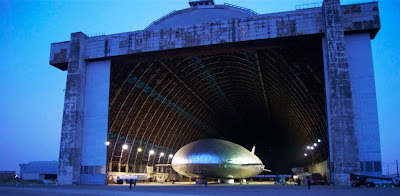
The first powered airship took to the skies on September 24, 1852, and the golden age of this type of aircraft ended with the tragic Hindenburg disaster on May 6, 1937. These days, we mostly see airships in the form of floating billboards. However, some have refused to let go of the notion that airships may have an important role to play in the future of air travel. Science fiction authors and filmmakers often feature reinvented takes on airships. And as it turns out, they could be onto something. Manufactured by Montebello, California-based American aircraft company the Worldwide Aeros Corporation, the Aeroscraft is a far cry from the blimps of the past. From its rigid structure to its control of static heaviness (COSH) system, it’s a modern aircraft that incorporates many cutting edge and ground-breaking technologies. The first functioning prototype, a more basic model known as The Pelican, was successfully floated on January 3, 2013 in Tustin, California. The Pelican w...

Amazing Depleted Uranium Rounds

Image
Depleted uranium rounds sound exactly like the kind of thing you’d want to stay right the hell away form. Even with the “depleted” bit thrown in there, these things still sound worse than wasps made of anthrax. In a nutshell, depleted uranium rounds are exactly what you’d expect: rounds with a small amount of uranium crammed in them, because the pointy metal thing that flew at you at 400 MPH wasn’t dangerous enough. It’s not what these rounds do to the human body that makes them terrifying though; it’s what they do to armour.

Record Arctic storm

Image
Months before Hurricane Sandy hurled the Atlantic Ocean into houses and cities along the East Coast, another record-breaking cyclone battered North America, helping push this year's Arctic sea ice to a record low, a new study finds. Arctic sea ice has been declining for decades, reaching a record low in September 2007 and hitting that record again in 2012.  "The Great Arctic Cyclone of August 2012" arose in Siberia on Aug. 2 and crossed the Arctic Ocean to Canada, lasting an unusually long 13 days. The cyclone hit a pressure minimum of 966 millibars on Aug. 6, the lowest ever recorded for an Arctic storm, professors Ian Simmonds and Irina Rudeva of the University of Melbourne in Australia report in the Dec. 15 issue of the journal Geophysical Research Letters. The pressure reading is only 26 mb higher than Hurricane Sandy's record low of 940 mb. (A typical low-pressure system usually hits around 1,000 mb.) "This pressure minimum and cyclone long...

Intresting and Amazing Bluetooth Keyboard

Image
Interesting Roll Up and Washable Bluetooth Keyboard is the Flexible Bluetooth Mini Keyboard is designed for durability and portability. It is a Bluetooth-enabled keyboard for the iPad, all Android tablets including the Galaxy Tab, and other tablets. The keyboard comes with a USB charging cable which can be used when it is low on power. 

The Amazing Electric Fishes

Image
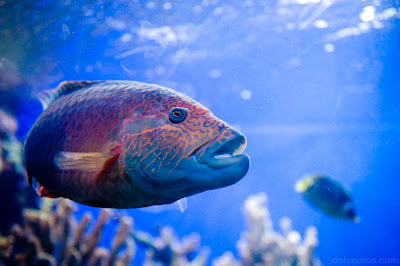
The electric organs are specialized organs, derived from the muscles or the nerve cell's axon, that can generate electric current, employed from catching the prey (electro-paralysis) to defense, orientation (electro-location, similar the way bats and dolphins use ultrasounds in ecolocation), or as a means of communication, for mating, feeding or territory defense. The electric fish, producing electricity, are electrogenic, but as they sense the electricity they are also electroreceptive. There are species that are not electrogenic, being only electroreceptive, detecting the weak fields generated by their prey (any living thing generates a weak electric field, which could be just 0.01 microvolts), like sharks, rays (except the electric ones, which are also electrogenic), lungfishes and even ... the platypus (a mammal!). It clearly appears that electricity works only in water. There are about 500 species of electric fish. Here are the most important examples: ...