Posts

Showing posts with the label Animal

Hanno The Navigator

Image
To be fair, Hanno has not been completely forgotten; the Carthaginian sea-captain and original “Navigator” is the titular inspiration for a 2008 song. Long before Pytheas journeyed through the Pillars of Hercules and north, Hanno made his way south along the West African coast. Whereas several explorers are notable for their solo efforts, Hanno amazes with the incredible scale of his undertaking. Hanno’s fleet consisted of 60 ships and 30,000 men and women. Hanno wasn’t merely exploring; he was colonizing. And to that end he was successful: the Carthaginians established several lasting towns and trading posts. Unfortunately, dwindling provisions forced Hanno to abandon his attempt at circumnavigating Africa. However, Hanno’s account did leave scholars with several intriguing references to African geography and animals, like the following:
Latest News for Every One: The Amazing Iran's Monkey

Image
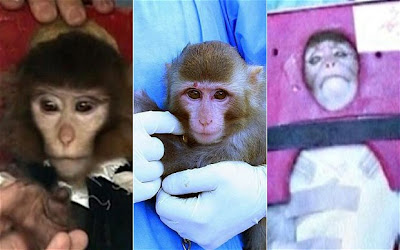
On Jan. 28, 2013, Iranian space officials announced they had successfully launched a live monkey into space, inching closer to the Islamic republic's goal of a manned mission. After a suborbital flight, the space capsule Pishgam (which means "pioneer" in Farsi) returned the monkey alive, according to Iranian news agencies. In 2011, Iran's effort to launch a live rhesus monkey into space atop a Kavoshgar-5 rocket failed, though what actually happened didn't come out in news reports from the country.

The Great pufferfish

Image
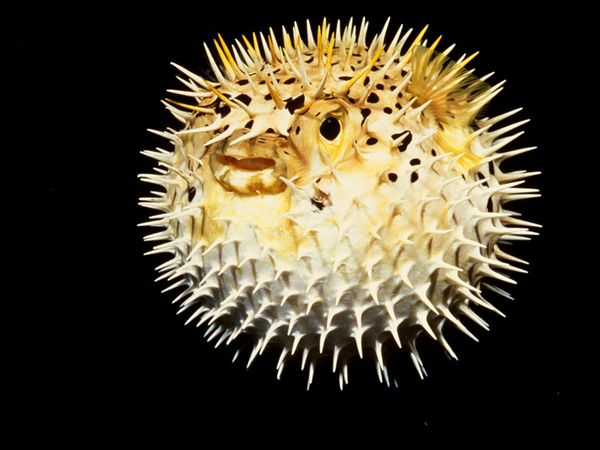
The pufferfish is a very curious animal for lots of reasons; it swallows air or water to make itself larger and more threatening, it combines its combining pectoral, dorsal, anal, and caudal fins into one set of fins (like a seahorse), and it is often super poisonous. But Dr. Gareth Fraser of Sheffield University is focused on the puffer for a different reason: its teeth.

The Amazing Electric Fishes

Image
The electric organs are specialized organs, derived from the muscles or the nerve cell's axon, that can generate electric current, employed from catching the prey (electro-paralysis) to defense, orientation (electro-location, similar the way bats and dolphins use ultrasounds in ecolocation), or as a means of communication, for mating, feeding or territory defense. The electric fish, producing electricity, are electrogenic, but as they sense the electricity they are also electroreceptive. There are species that are not electrogenic, being only electroreceptive, detecting the weak fields generated by their prey (any living thing generates a weak electric field, which could be just 0.01 microvolts), like sharks, rays (except the electric ones, which are also electrogenic), lungfishes and even ... the platypus (a mammal!). It clearly appears that electricity works only in water. There are about 500 species of electric fish. Here are the most important examples: ...

Macaws can live for 80+ years

Image
Macaws are the largest of all the parrots. There are over 370 different types of parrots on Earth, and the Macaws are the largest of all of them. Large macaws normally weight between 2 and 4 pounds, which is fairly hefty for a bird -- their bones are hollow in order to make them lighter, so that they can achieve flight. The largest of the macaws, the Hyacinth Macaw, can reach lengths of nearly 3 and a half feet long from the beak to the tip of the tail. In addition, they boast a wingspan of up to 60 inches, which is a whopping 5 feet! Macaws are beautiful, brilliantly colored members of the parrot family. Many macaws have vibrant plumage. The coloring is suited to life in Central and South American rain forests, with their green canopies and colorful fruits and flowers. The birds boast large, powerful beaks that easily crack nuts and seeds, while their dry, scaly tongues have a bone inside them that makes them an effective tool for tapping into fruits.

10 Amazing New Animal Species Discovered In 2012

Image
You’d think that after living alongside them for millions of years, we’d know just about every animal that roams the earth and its atmosphere. Thanks to limitations posed by our bodies and accessible technology, however, that’s far from true. Recent research suggests that an astonishing 86 percent of all plants and animals on land and 91 percent of those in the seas have yet to be named and cataloged. Sadly, this revelation only underscores the importance of conservation: since human development and climate change means that many species will become extinct before they’re discovered. Despite these seemingly insurmountable threats, scientists of all disciplines are still out in the field, working hard to create a record of each and every magnificent species our planet has to offer. As 2012 draws to a close, we thought it might be fun to spotlight some of the new creatures that took their official place in history this year. Some are big, some are small. Some are startling, whi...